Sensor characterization
Monolithic Active Pixel Sensors (MAPS) are characterized through a combination of laboratory measurements and beam tests to evaluate their performance.
Laboratory tests
- Electrical characterization
- Charge collection studies using radioactive sources
- Threshold tuning and noise levels
- Power consumption and thermal behavior
- System validation with custom DAQ setups
Beam tests
- Detection efficiency (including in-pixel)
- Spatial resolution and residual distributions
- Cluster size and charge sharing studies
- Tracking performance with reconstructed particle trajectories
- Validation under realistic operating conditions
Software and Analysis Chain
Sensor characterization relies not only on dedicated laboratory and beam-test measurements, but also on a complete software chain for data acquisition, reconstruction, analysis, and simulation. Within the Pixel Platform, these tools are used to transform raw detector signals into physically meaningful performance metrics such as efficiency, spatial resolution, cluster properties, and system response.
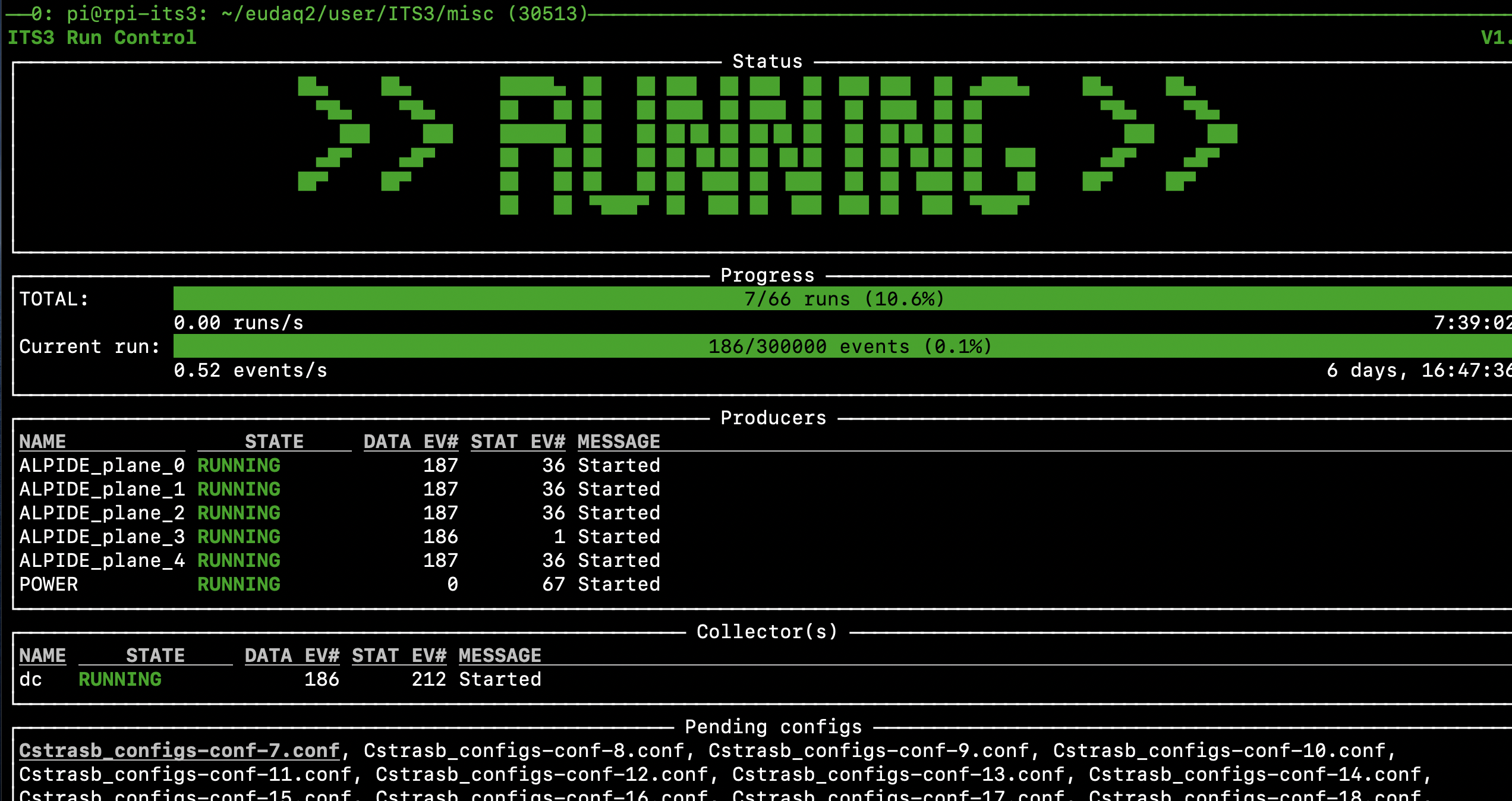
EUDAQ2 is a modular C++-based data acquisition framework widely used in laboratory and beam-test environments for pixel detector studies.
It handles detector communication, trigger distribution, event building, synchronization, and storage of raw data in a structured format suitable for subsequent offline processing.
In our setups, EUDAQ2 provides the interface between custom readout hardware and sensors such as ALPIDE, APTS, and BabyMOSS, enabling reproducible measurements under controlled and well-documented conditions.
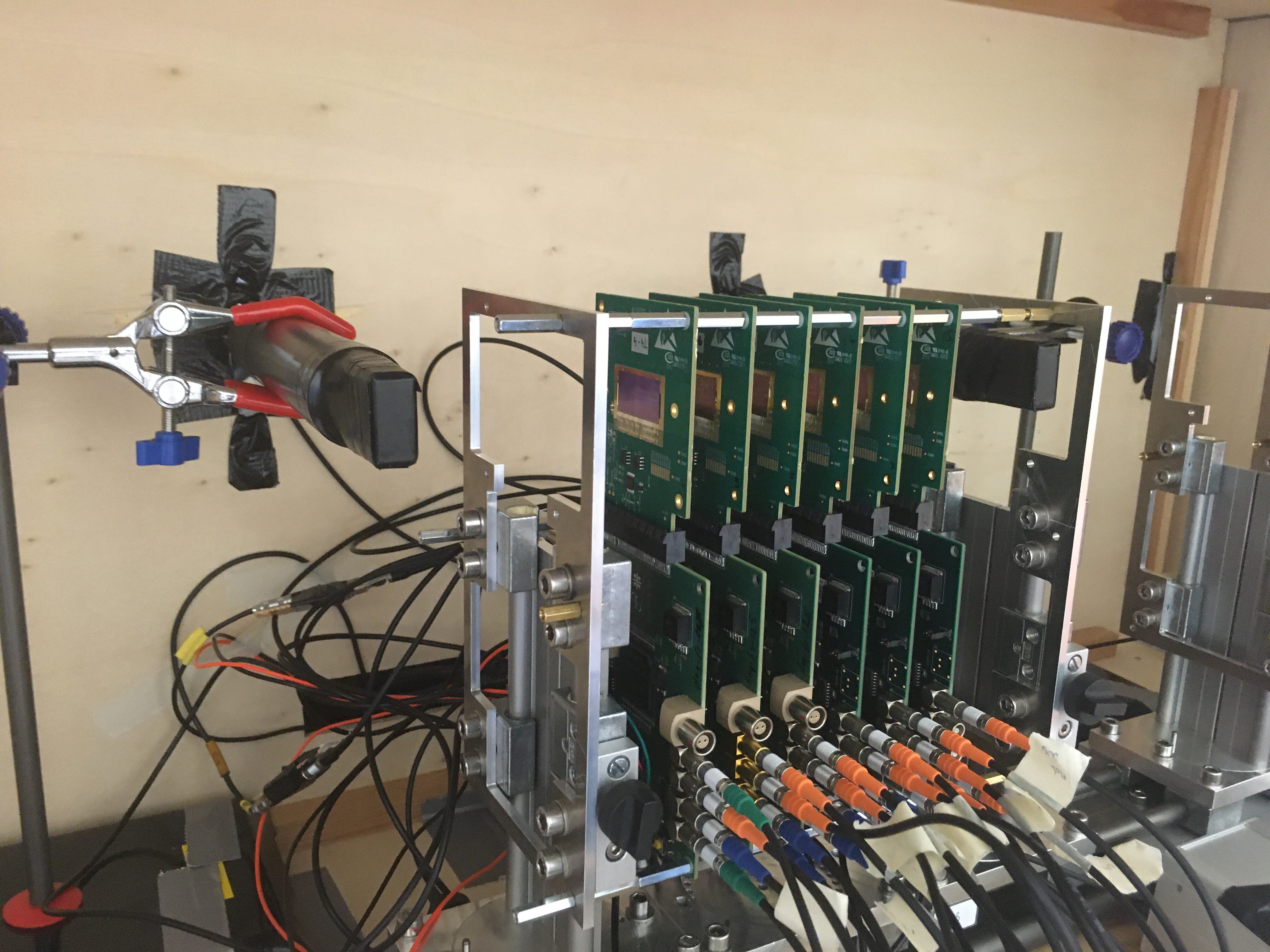
Corryvreckan is a flexible and lightweight reconstruction framework designed for test beam data analysis of silicon pixel detectors.
Starting from the raw data recorded with EUDAQ2, it performs clustering, spatial alignment, track reconstruction, and association of reconstructed particle trajectories with the device under test.
This allows extraction of key observables such as hit efficiency, residual distributions, spatial resolution, cluster size, and charge-sharing behavior, which are central to the characterization of thin CMOS MAPS for ITS3 and ALICE 3.
ROOT is the standard analysis framework used throughout high-energy physics for structured data storage, statistical evaluation, and visualization.
In sensor characterization studies, ROOT is used to process reconstructed data and derive detector performance quantities, including noise distributions, efficiency maps, residuals, cluster properties, and correlations with operational parameters.
It also provides the basis for producing publication-quality plots and summary figures used in detector qualification, performance comparisons, and design optimization studies.
Geant4 is a simulation toolkit used to model the interaction of particles with detector materials across a broad range of energies and detector geometries.
It makes it possible to describe realistic sensor layouts, support materials, passive services, and radiation sources, and to study quantities such as energy deposition, scattering, and generation of secondary particles.
These simulations provide an essential reference for interpreting measurements and for understanding how detector geometry and material budget influence the observed performance.
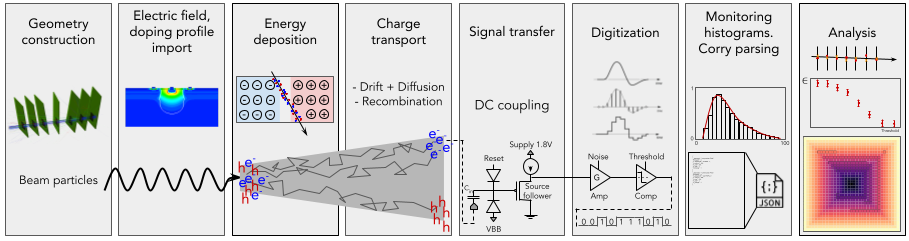
Allpix² is a dedicated simulation framework for semiconductor pixel detectors, bridging detailed particle transport with detector-level signal formation and digitization.
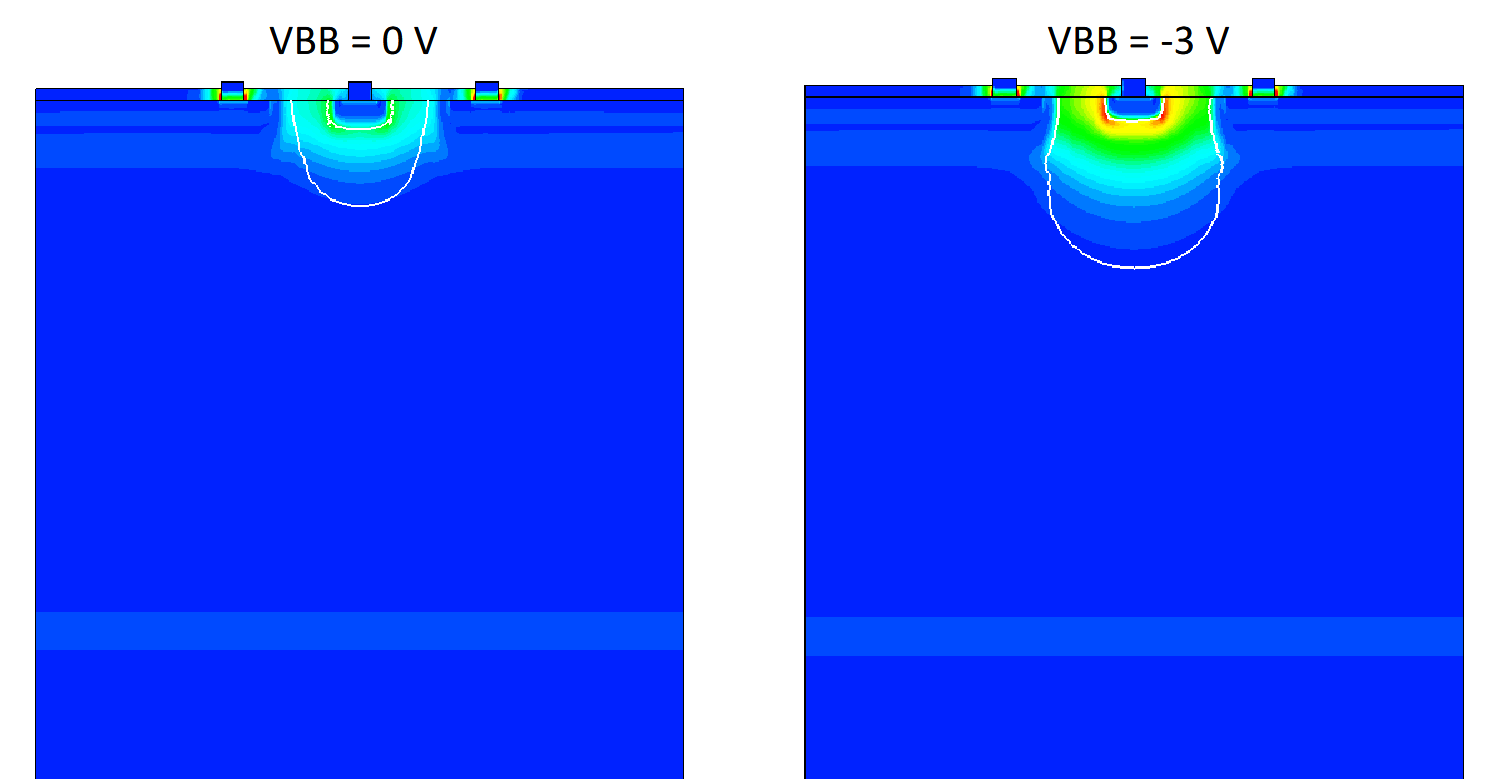
It combines Geant4-based energy deposition with models for charge transport, electric field response, timing, and front-end digitization, allowing realistic prediction of detector observables.
This makes Allpix² particularly valuable for comparing simulated and measured cluster shapes, charge-sharing behavior, efficiency, and spatial resolution in sensors such as ALPIDE, APTS, and BabyMOSS.
A collection of images